Women’s clothing manufacturer size set sample approval is an important step between fit development and bulk production. For overseas fashion brands, wholesalers and retailers, the size set helps confirm that a garment does not only fit correctly in one base size, but also grades consistently across the planned size range.
When buyers skip this stage, problems can appear later in production: sleeves become too long in larger sizes, neck openings grade incorrectly, waist positions shift, or overall proportions change. A structured size set review reduces these risks before the factory cuts bulk fabric.
What Is a Size Set Sample in Women’s Clothing Manufacturing?
A size set is a group of samples made in selected sizes from the final graded pattern. Depending on the collection, a buyer may request all sizes or a representative selection such as XS, M and XL. The purpose is to confirm grading, measurements, proportions and construction before mass production.
The size set comes after the base fit has been approved. If the base size is still changing, grading too early can multiply errors across the full range. Buyers who are still developing their fit can review our women’s clothing fit block development guide.
1. Confirm the Approved Base Size First
Before requesting a size set, confirm that the base size pattern, measurements and fit comments are closed. The approved sample should reflect the intended silhouette, ease and construction. Any unresolved issue in the base size can be repeated in every graded size.
2. Compare the Grading Rule With the Size Chart
Do not judge size-set samples only by visual appearance. Compare each sample with the approved measurement specification. Key points may include bust, waist, hip, shoulder, sleeve length, armhole, garment length, rise and hem opening depending on the style.
If your brand already has a master grading rule, provide it to the factory. If not, ask the pattern team to explain how measurements increase or decrease between sizes. Our custom women’s clothing size grading guide explains this in more detail.
3. Check Proportion, Not Only Circumference
Good grading is not simply adding the same amount to every measurement. Neckline depth, pocket position, dart location, waist placement, sleeve width and overall length may need different grade rules. A garment can technically meet chest and waist measurements while still looking unbalanced in smaller or larger sizes.
4. Review Fit on More Than One Body Size
For fitted women’s wear, it is useful to review the size set on appropriate fit models or dress forms rather than only measuring garments flat. This is especially important for dresses, tailored tops, trousers and styles with shaped waistlines or complex sleeves.
5. Verify Construction Is Consistent Across Sizes
Check whether seam allowance, zipper length, button spacing, lining, elastic, pocket dimensions and other construction details remain practical across the full size range. Some components cannot simply be scaled proportionally and may need size-specific adjustments.
6. Watch for Common Size-Set Problems
Typical issues include armholes that become too deep, sleeves that grade too quickly, necklines that become too wide, waist positions that shift vertically, and lengths that do not match the target market. Buyers should record these issues clearly by size rather than giving one general comment for the whole set.
7. Check Woven Garments Carefully
Woven women’s wear has less natural stretch than many knit garments, so grading accuracy is especially important. Dresses, blouses and tailored separates often depend on darts, princess seams, zippers and shaped panels. Small grading errors can affect comfort and appearance.
For woven styles, see our woven women’s wear production quality guide for additional cutting and seam-control points.
8. Use the Size Set to Confirm Tolerances
The buyer and factory should agree on measurement tolerances before bulk inspection. A tolerance is not a substitute for correct grading; it defines the acceptable manufacturing variation around the approved specification.
Our women’s clothing measurement tolerance guide explains how buyers can define practical limits for production.
9. Keep Approved Size-Set Records
Once approved, keep the final measurement chart, grading rules, sample comments and any reference photos together. The factory should also retain the approved pattern files and production references so the same size standards can be used for repeat orders.
10. Do Not Start Bulk Cutting Until Major Size Issues Are Closed
Minor production details may still be documented later, but unresolved fit or grading problems should be corrected before bulk cutting. Once fabric is cut, changing the grade rule can create expensive rework or unusable pieces.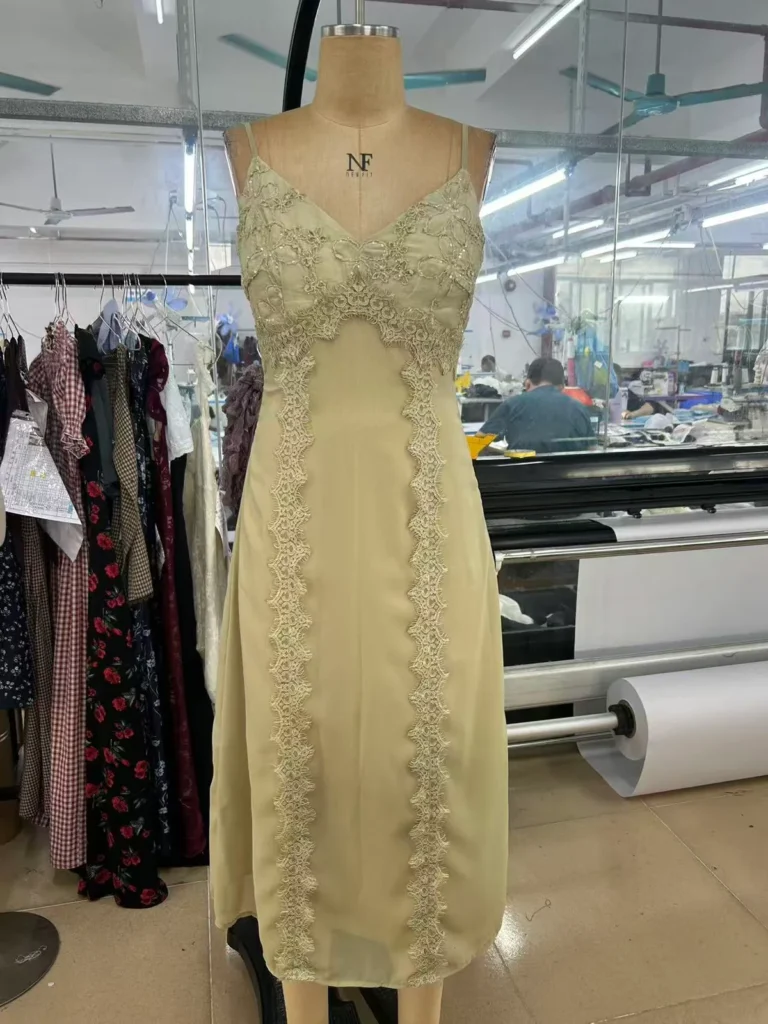
Women’s Clothing Manufacturer Size Set Sample Checklist
- Base size fit is approved
- Measurement chart is final
- Grade rules are documented
- Selected sizes meet specification
- Proportions remain balanced
- Construction works across sizes
- Woven styles have enough movement and ease
- Measurement tolerances are agreed
- All comments are closed before cutting
Conclusion
A well-managed women’s clothing manufacturer size set sample gives buyers evidence that the approved design can be reproduced consistently across the full commercial size range. It helps protect fit, reduce bulk measurement problems and create a more reliable basis for repeat production.
If you are preparing a women’s clothing order, send your size chart, tech pack and target quantity for production review.