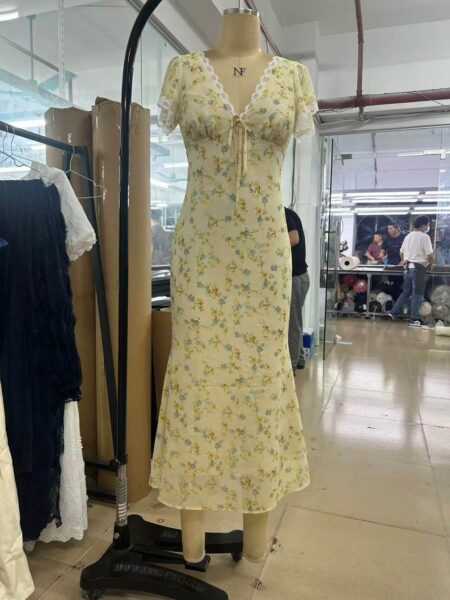
Wrap dress manufacturing needs a clear agreement about how the garment closes, how the panels overlap and what happens when the wearer moves. A fitted photograph can look convincing while the dress gaps when seated, exposes the underlayer or relies on a tie that is difficult to secure.
For overseas fashion brands, wholesalers and retailers, the purchasing brief should define functional coverage before the factory quotes. This guide focuses on woven wrap dresses, where limited stretch makes pattern balance and closure position especially important. Requirements should follow the brand’s customer and intended fit rather than one universal overlap measurement.
Identify a true wrap or a fixed wrap effect
A true wrap opens around the body and is secured by ties or other closures. A fixed or faux-wrap design creates the visual effect with joined panels and may use a separate zipper or opening. These are different construction briefs; specify which one the buyer intends before sampling begins.
Include inside and outside sketches showing the underlap, outer panel, tie path, waist join and any concealed fastening. If the design combines a fixed bodice with a functional skirt wrap, mark that distinction. Ask the women’s clothing manufacturer to flag unclear closure details instead of making an undocumented choice.
Define overlap at useful reference points
Record overlap at the neckline, waist, hip and lower skirt where relevant. State how the dress should be closed during measurement, including tie position and any internal fastening. A panel width measured flat cannot independently prove coverage on the intended wearer.
Check the wrap on the agreed fit reference while standing, sitting and walking. Record whether the neckline opens, the waist shifts or the skirt underlap becomes visible. Where a slit-like opening is intentional, identify the acceptable appearance during movement. Use the dress opening and movement checks to clarify this part of the approval without treating every wrap edge as a conventional sewn slit.
Review the tie system as a working closure
Specify tie length, finished width, attachment location and intended tying method. Confirm whether a tie passes through a side opening or internal loop, and whether it is removable or permanently attached. The path should be understandable to the customer and repeatable across sizes.
Inspect attachment points, seam intersections and the tie exit for distortion or damage during repeated fastening. A decorative belt should not accidentally become the only structural closure unless that is the approved design. Ask for a construction trial if the selected fabric creates a bulky knot, slips easily or frays at a narrow opening.
Approve fabric behavior and inside finishing
A crisp cloth, fluid viscose and lightweight textured woven can produce different wrap edges and waist folds. Develop the fit sample in the proposed production material, or explicitly identify what remains unapproved when a substitute is used. Review opacity where the skirt has only one layer outside the overlap.
If the dress is lined, confirm whether the lining follows the wrap panels and how it stays concealed. The lining selection guide can support decisions about movement and coverage. Approve edge finishing and pressing on the completed sample, checking that the wrap edge does not roll outward or reveal the inside construction.
Check the size range beyond the base sample
The relationship between body size, panel overlap and tie position should remain intentional as the pattern grades. Adding the same amount to every visible edge is not a substitute for a reviewed grading plan. Check that the tie reaches its intended position and that the waist opening stays correctly located.
Use selected size-set samples to repeat the movement assessment. Record any separate comments for the smallest and largest sizes. Approve revised patterns and closure positions before cutting; do not expect final inspection to correct a systematic coverage issue.
Keep the buyer approval record specific
| Item | Evidence to retain |
|---|---|
| Wrap construction | Inside and outside views identifying fixed and opening sections |
| Coverage | Fit photographs and movement comments at agreed reference points |
| Ties and fasteners | Measurements, positions and fastening instructions |
| Size consistency | Released pattern revisions and size-set comments |
Confirm the bulk operation before release
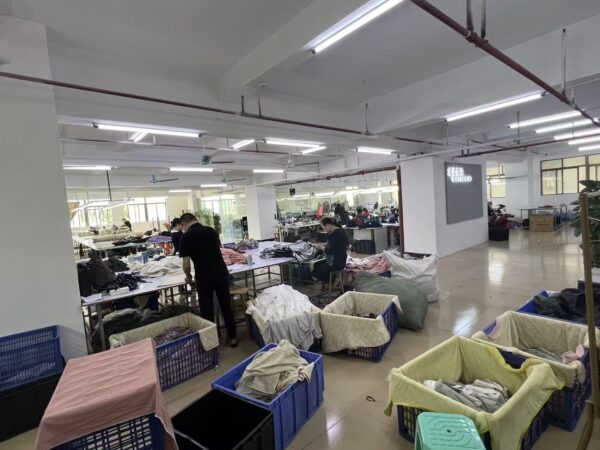
Early line pieces should match the approved tie placement, panel orientation and finishing method. In inline inspection, compare the underlap and outer panels in the correct closed position, not just laid separately on a table. Identify any recurring twist or uneven edge before it affects the full order.
For a quotation, provide quantities by color and size, the closure type and the required delivery window. To discuss wrap dress manufacturing for an OEM or private label collection, send your tech pack and purchasing requirements to Mugekoo. Include your coverage expectations so sampling can resolve the functional details before bulk approval.