Shirt dress manufacturing combines shirt-style upper-body construction with the length, movement and balance of a dress. For overseas brands and wholesale buyers, the sourcing brief should explain the full product, not just a collar and button-front image. A fitted waist, gathered skirt or straight silhouette changes the pattern, operations and approval priorities.
This guide focuses on woven shirt dresses for OEM and private label production. The aim is to prepare a comparable quotation and sampling request, then confirm that the factory can reproduce the approved design across the ordered size range.
Specify the silhouette and opening before pricing
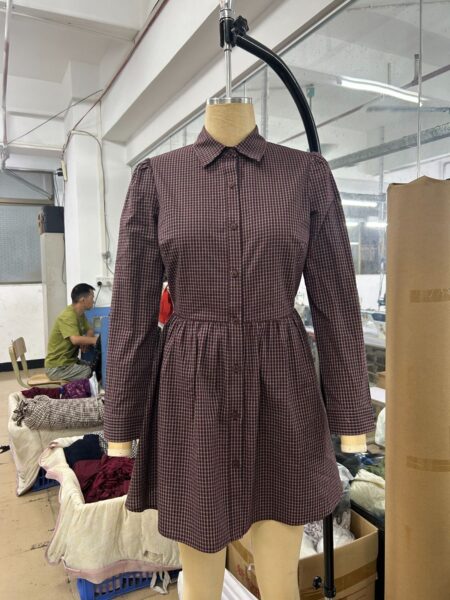
Identify whether the dress is fitted, relaxed, oversized or shaped with a belt. Show whether the front opening continues to the hem or stops above a joined skirt. If some buttons are decorative, mark the functional opening clearly so the sample team does not assume that every button must open.
Provide front, back and inside drawings with the waist seam, yoke, darts, gathers and pockets. State the intended length and wearing ease. The factory needs this information to estimate operations and determine which details require a physical trial before it confirms production feasibility.
Choose fabric for both the bodice and skirt
The same material must support the upper details while giving the skirt the intended shape. A firm cloth can hold a collar but create more volume at gathers; a fluid material can change how a structured waist and front edge hang. Approve the fabric using a garment sample rather than a swatch alone.
For checks or stripes, define where visual matching matters. The motif placement guide provides a way to document alignment points, but the factory should calculate consumption for the actual material and size mix. One-way layouts or deliberate matching can change the quote and the amount of fabric needed.
Review the collar, cuffs and opening as assemblies
Include collar dimensions, stand details where used, cuff depth, sleeve opening and visible stitching. Confirm support materials on the actual shell fabric and review the finished result after pressing. A collar sample made in a substitute material may not establish the appearance of the bulk garment.
For the detailed front closure trial, use the existing button placket approval checks. The product-level shirt dress review should also ask whether the complete garment remains balanced when closed, especially where the front crosses a waist seam or joins a gathered skirt.
Approve waist position and skirt balance while worn
Check the waist level on the intended fit reference and confirm whether it should be natural, raised or dropped. Evaluate a belt or tie in its intended position. A waist seam can look level on a table yet sit incorrectly on the body if the bodice balance is wrong.
Review sitting, walking and reaching movements. Record any strain at the bust, waist or hip, and whether the skirt opens more than intended. Check front and back length in the worn position. Do not solve a fit issue only by moving a button without reviewing the surrounding pattern and ease.
Make pocket and belt details explicit
Specify functional pockets separately from decorative flaps. Identify pocket depth, opening, placement and any reinforcement. A pocket used in a soft skirt should not distort the approved silhouette under the brand’s agreed use check. Confirm that left and right positions match the released pattern.
Use the dress pocket construction guide for the assembly details. For belts, record finished length and width, fastening method and loop placement. The quotation should state whether belts are included and whether they require separate labeling or packing.
Compare quotations using one specification
| Cost input | What the buyer should clarify |
|---|---|
| Material yield | Width, pattern direction, matching rules and size ratio |
| Construction | Collar, cuffs, waist join, pockets, belts and opening |
| Development | Sample stages and unresolved technical details |
| Order structure | Quantity by style, color and size, plus packaging |
A low garment MOQ does not remove the mill’s material minimums or the cost of separate color setups. Use a consistent manufacturing RFQ to identify included operations and separate development charges. Compare the complete buying brief rather than selecting the lowest unexplained unit price.
Release the size range and bulk reference
Review representative sizes for collar proportion, waist position, sleeve mobility and skirt length. Retain the approved pattern and sample revision, including any changes to pocket or belt positions. Early production should be checked against that reference before the remaining quantity follows the same operations.
To discuss shirt dress manufacturing with a women’s clothing manufacturer in China, send your tech pack and purchasing requirements to Mugekoo. Include your silhouette, fabric preference, size breakdown and delivery window so sampling and pricing address the product you intend to buy.