Garment carton compression testing evaluates a shipping package under a defined compressive loading procedure. For overseas apparel buyers, it supports decisions about the packed carton and its ability to protect the agreed contents under the selected test conditions. The test is different from a drop assessment and should be planned around the distribution arrangement. Specify the packed sample, protocol and acceptance criteria before committing to bulk packing.
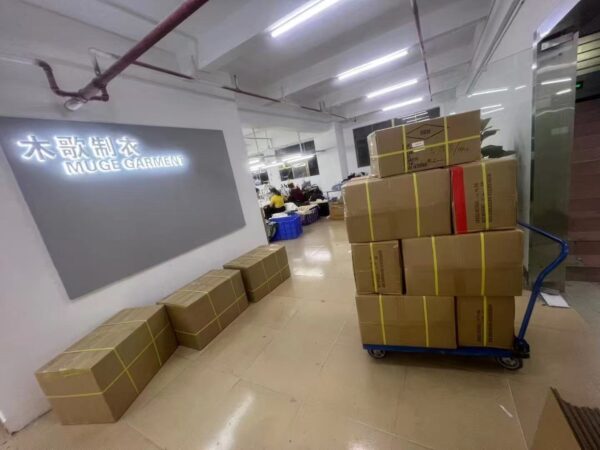
Describe the packaging and distribution arrangement
Identify carton dimensions, gross mass, garment count, inner packaging and closure method. Describe whether cartons travel individually or as part of a pallet load, and how they are handled and stored at later stages. Provide any customer packaging specification to the laboratory.
Ask the testing team which assessment is appropriate for the intended decision. Do not infer the required load solely from carton size or pick a number used by a previous customer. Test planning should reflect the applicable procedure and relevant distribution assumptions.
Distinguish performance testing from conditioning
ISTA explains compression conditioning as preparation before subsequent vibration and impact tests. It is not intended as a compression performance pass/fail assessment or a prediction of warehouse stacking capability.
Confirm which requirement the buyer actually needs. If a report records conditioning, do not relabel it as proof that the carton passed a stacking-strength requirement. Keep the laboratory’s test purpose and reported conclusion visible in the purchasing record.
Confirm the protocol and its load calculation
The laboratory should identify the applicable current procedure, loading arrangement, duration, conditioning and sequence. Ask which shipment or stacking inputs the protocol requires and who supplies them. Confirm units and record the assumptions used.
ISTA’s compression guidance illustrates that some test-load calculations depend on the number of packages in a stack. This is a reason to document actual assumptions, not to apply one published formula to every garment shipment. The controlled procedure remains the execution reference.
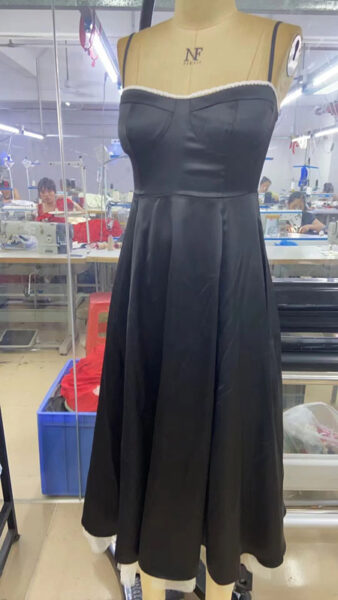
Prepare representative packed samples
Use the proposed carton material, garment arrangement, inner bags and closure. Record the carton specification and supplier reference, not only its external dimensions. Confirm whether different carton sizes, garment counts or load arrangements require separate representative samples.
Connect the test sample to the carton assortment matrix. A result from one packing configuration should not silently approve all others. Ask the laboratory how samples should be delivered so prior shipping damage does not compromise their intended condition.
Agree acceptable damage and inspect the contents
Define packaging deterioration and product damage before testing. Specify how carton deformation, closure opening, inner packaging damage, accessory damage, contamination or unacceptable garment presentation will be judged. State who may approve an exception and what evidence is required.
Follow the procedure’s rules for observing or opening the package. At the authorized assessment stage, review the garments and inner components as well as the box. A carton can retain its outer shape while still producing an unsatisfactory result for the buyer’s contents or receiving requirements.
Keep other transport hazards in the approval plan
A compression result does not establish resistance to every shipping hazard. Use the garment carton drop testing guide for impact-related planning and the packaging moisture-control guide for a separate concern. Ask the laboratory whether the complete requested protocol includes additional elements.
If a formal protocol is required, confirm that all applicable stages were performed at the specified levels and sequence. Completing an isolated compression exercise should not be represented as certification of a broader test program.
Release the approved packing construction
If a result is unsuitable, identify the observed failure and proposed correction with the factory and packaging supplier. Review changes to carton construction, closure or interior arrangement, then retest the agreed representative configuration. Keep revisions identifiable so the successful report refers to the version used in bulk.
For shipment planning with Mugekoo, provide destinations, packing requirements and buyer protocol references. Add the packaging specification and testing responsibility to the purchase order checklist. Before dispatch, verify that production cartons match the approved arrangement; a laboratory result supports a defined decision rather than guaranteeing every shipment outcome.