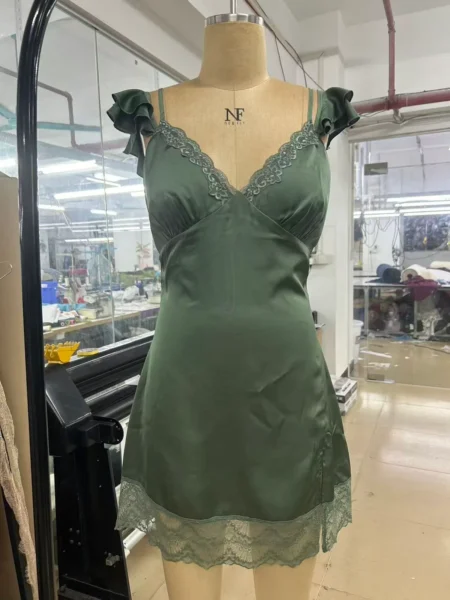
Woven camisole manufacturing depends on the relationship between neckline shape, strap position, body fit and coverage. For overseas women’s clothing brands, a simple-looking top still needs a detailed production brief. Thin straps and lightweight materials leave little room to hide construction differences. This guide helps buyers define a woven camisole top for sampling and bulk quotation, rather than sourcing knitted basics or approving a slip dress.
Define the garment before requesting a price
Provide front and back drawings with the intended hem length, neckline, armhole shape and strap construction. State whether the body is straight, shaped with darts, cut on the bias or gathered. Identify lace, ruffles, lining and any fastening separately.
Confirm whether the item is designed as an outerwear top or an underlayer. That choice affects coverage and the presentation buyers expect. A reference photograph should support the drawing, not replace the specification: a longer sample garment can show a neckline idea without defining the required top length.
Approve straps as a functional construction
Record strap width, finished length, attachment position and whether adjustment is required. If sliders and rings are included, approve their dimensions, finish and fit with the strap material. Confirm where joins and raw edges are concealed.
Review the straps on the intended fit model. Check slipping, twisting, comfort and whether adjustment changes the neckline position as expected. Ask the sample team to propose attachment reinforcement appropriate to the material, then approve the sewn result. Hardware appearance alone does not establish that the assembled strap works well.
Review neckline and armhole fit together
Check gaping, underarm coverage and the position of the top during normal movement. A strap length change can alter both neckline depth and armhole position, so review the whole upper garment after a correction. Keep photographs and comments tied to the sample version.
Use the garment points of measure guide to define repeatable strap, body and neckline measurements. Specify the laying-out method; a soft garment can give different readings if one inspector stretches the neckline while another measures it relaxed.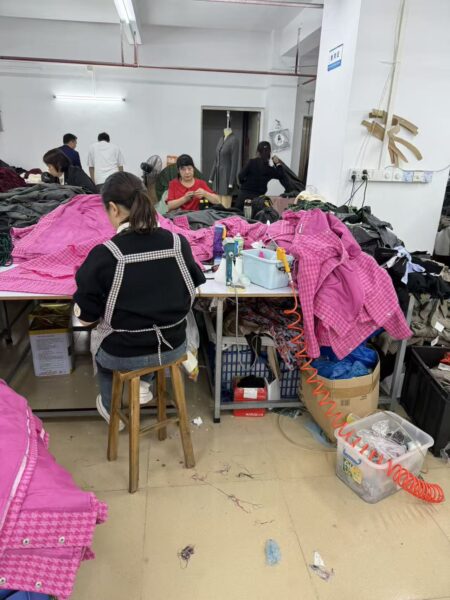
Approve coverage in the actual material
Confirm fabric composition, weight, finish and color. Evaluate the proposed shell with any lining or facing in the complete sample. Review coverage at the bust and through light-colored areas under agreed viewing conditions, rather than approving only a small swatch.
The fabric opacity assessment guide helps organize that review. If a lining is added, check whether it changes drape or restricts movement. An early substitute-fabric fit sample should remain identified as such until the actual material combination is approved.
Trial lace and other decorative edges
Request a sewn trim trial where lace or another decorative edge affects the neckline or hem. Compare the trim’s behavior with the shell, including gathering, curling and visible joins. State the intended overlap and how the ends are finished.
Check the trim arrangement after the agreed care treatment. Use the trim sourcing guide for product references, minimums and approval records. Any substitute should be reviewed in the sewn construction; matching color and nominal width do not establish an equivalent neckline result.
Review size grading and bulk feasibility
Ask how strap positions, neckline depth, armholes and body width change through the ordered sizes. Review representative sizes where the fit risk warrants it. A narrow strap layout that works in the sample size may need closer evaluation at the ends of the range.
Request quotation confirmation for material, trim, hardware, lining, labels and finishing. Clarify minimum quantities by color and material and the number of included sample rounds. Approve any simplified construction proposed for cost reasons before treating the revised price as comparable.
Prepare the production approval package
Keep the accepted sample, drawing, measurements, strap details and material references together. Before cutting, confirm that the production pattern and components match that approval. Inspect attachment points, neckline shape, edge finishing and adjustment function during production.
To discuss a woven camisole project with Mugekoo, prepare the drawings, fabric preferences, size quantities and delivery window using the manufacturing RFQ checklist. Ask the factory to confirm product capability and the sampling sequence before committing to bulk.