Woven dress neckline construction is one of the first details customers notice. A neckline can look simple in a sketch but require careful pattern work, cutting, interfacing, sewing and pressing to keep its intended shape through fitting, wear and care. For buyers, neckline quality should be approved on the sample and monitored as a repeatable bulk operation.
Whether the style has a crew neck, V neck, square neck, halter shape, collar or shirt-dress opening, the construction must balance appearance, comfort and stability without adding unwanted bulk.
Approve the neckline on the correct fit reference
Evaluate the neckline while the sample is worn, not only on a hanger or flat table. Check depth, width, symmetry, gaping, shoulder position and the relationship to the bust and armhole. A change to neckline shape may affect the whole upper-body balance, including facing, lining, collar and closure.
Use the size set sample to confirm that the neckline grades correctly across the full size range. A neckline that sits correctly on a base sample can become too open or restrictive at the smallest or largest size.
Choose the right support construction
Woven necklines may use facings, linings, bindings, collars, elastic, stay tape or fusing depending on the fabric and style. The method should hold the intended edge while allowing the garment to feel comfortable. Lightweight fabrics can need support to avoid stretching; heavier fabrics may need a reduced-bulk method to prevent a stiff edge.
For styles that use fused support, approve the material and pressing result with the interlining and fusing review. Poor bonding, incorrect temperature or incompatible material can create bubbling, shine or a neckline that changes after care.
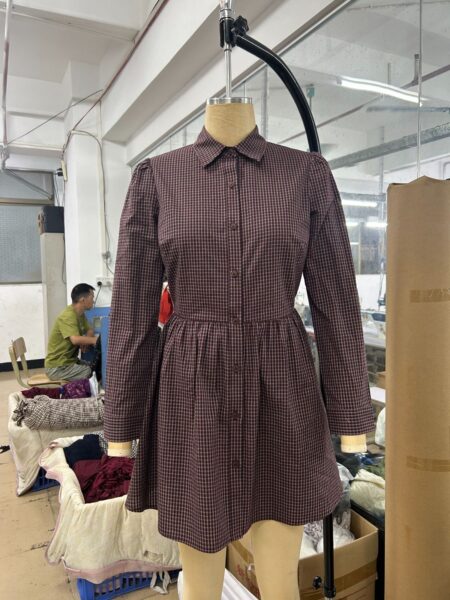
Control cutting and sewing accuracy
The neckline edge should be cut from the current approved pattern and kept on grain where required. Notches, stay-stitching and seam allowances guide the operation; if they are missing or inconsistent, one side can stretch more than the other. Inspect the completed neckline for equal curves, balanced points and smooth transitions into straps, collar or shoulder seams.
On V necks, square necks and shaped openings, compare the left and right sides at fixed reference points. A small mismatch is highly visible near the face and can also affect how the dress hangs through the bodice.
Pressing and finishing matter
Pressing should shape the neckline without flattening its edge, creating shine or imprinting seam allowance. The factory should use appropriate temperature, pressure and protective material for the fabric. Clip and grade seams only as needed to achieve a smooth curve without weakening the edge.
When the neckline is close to a darted bodice, review it together with the dart construction standard. Uneven shaping below the neckline can make a correct edge look distorted on the body.
Check closure and wear performance
If the dress uses a back or side zipper, button placket or keyhole closure, close it during inspection and check that the neckline remains level and comfortable. A closure can pull a neckline open or twist it if the seam alignment is incorrect. This is especially important for fitted woven dresses with limited stretch.
Include the neckline in inline inspection, then compare finished pieces with the approved sample before packing. Inspect a range of sizes and colors, not only the first output.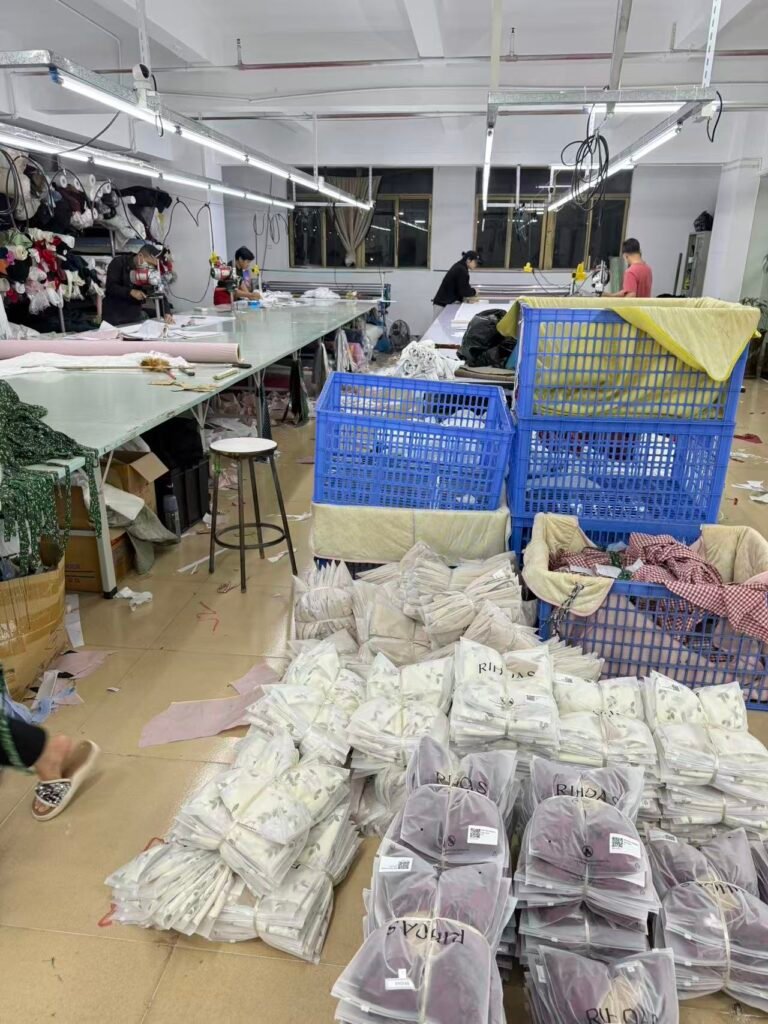
Check the neckline after care and handling
For styles with a delicate edge, fused facing or contrast binding, include neckline appearance in the approved care and handling review. Recheck that the curve remains smooth, the edge does not roll and the neckline still sits evenly after pressing, folding or any specified wash process. If the effect changes, the buyer should decide whether to adjust the support material, sewing method or care instruction before bulk release.
Woven dress neckline construction should preserve the intended shape from sample to bulk. To review a neckline, facing or collar construction before production, share the tech pack and sample requirements through the contact page.