Woven skort manufacturing combines the appearance of a skirt with an inner shorts construction. Buyers need to approve both layers and how they work together during movement. For women’s clothing brands, a front-view reference alone does not define coverage, fastening or the fit of the hidden shorts. This guide helps overseas buyers prepare a complete skort specification for sampling and quotation rather than ordering a skirt and separate shorts as unrelated items.
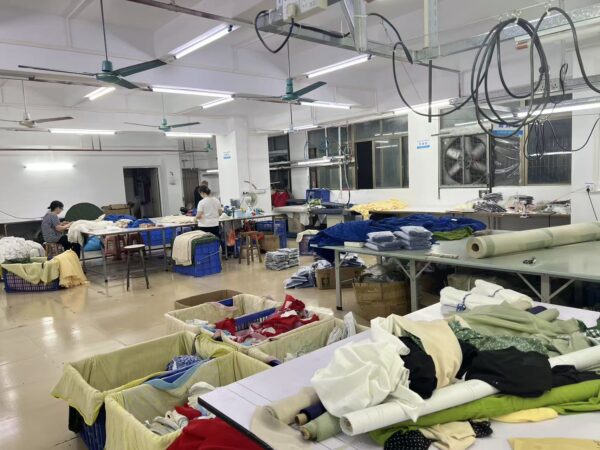
Show the outer and inner construction separately
Provide front, back and inside drawings. State whether the skirt effect is a front overlay, a wrap panel or an outer skirt surrounding inner shorts. Identify which edges are fixed and which are free, plus pockets, closures and any decorative fastening.
Mark the connections between layers. Ask the factory to confirm whether they share a waistband, opening or side seam. A decorative button on the overlay should not be assumed to function as the garment’s main closure unless the technical drawing says so.
Approve the inner shorts as a garment
Specify waist, hip, rise, inseam and leg opening for the shorts, together with the intended wearing ease. Review sitting, walking and bending in the sample size. Check restriction, bunching and whether the inner layer changes position during movement.
Use the woven shorts manufacturing guide for that construction, while retaining the skort’s combined approval. A comfortable inner-short sample is useful, but it does not independently approve the garment after the outer panel and waistband are attached.
Review outer-panel coverage in movement
Define the intended appearance from the front, side and back. Review the overlap and free edges while walking and sitting. Record what exposure of the shorts is acceptable for the design rather than relying on a generic requirement that the outer panel must always stay flat.
Check whether pockets or attachments pull the overlay out of position. If a correction changes panel width or length, review fabric consumption and the complete silhouette. Keep reference photographs tied to the sample version so a styled image is not confused with the approved normal wearing position.
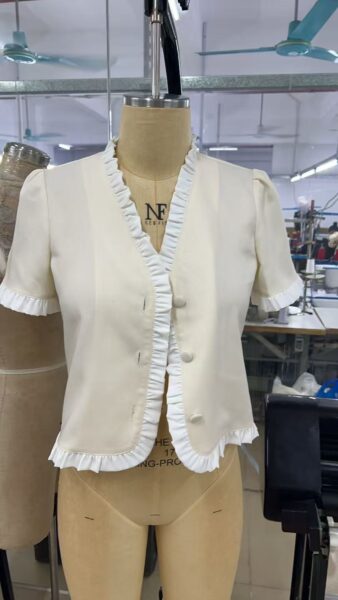
Define measuring landmarks for both layers
Prepare a diagram showing outer length, overlay width, overlap, inner inseam, rise and relevant opening measurements. State the garment’s fastening condition and how free panels are positioned during measuring. Keep pattern cutting dimensions separate from finished garment measurements.
The garment points of measure guide helps make these instructions repeatable. A single total-length figure cannot describe both outer coverage and inner fit. Record the layer being measured in every inspection line to avoid comparing unlike readings.
Approve materials, openings and waistband together
Identify shell and inner-short materials, including any lining or support. Confirm that the combination provides the intended movement and coverage. Inspect bulk where layers meet at the waistband and opening, and check that fastenings are accessible and operate normally.
If elastic or an adjustment detail is included, document the relaxed and agreed extended measuring conditions. Review the assembled garment after the buyer’s required care treatment. A material change in one layer may need a new combined sample even if the other layer remains unchanged.
Check grading and the quotation before bulk
Ask how overlay coverage, inner rise, hip and leg opening change across the ordered size range. Plan representative reviews using the size-set sample guide. Confirm that the smallest and largest ordered sizes retain the intended relationship between layers.
Request a quote covering both constructions, shared or separate openings, pockets, support, finishing and packing. Clarify material minimums and sample rounds. An overlay skort and a fully surrounding outer skirt can require different operations, so keep the included design explicit.
To discuss a woven skort project with Mugekoo, send inside and outside drawings, material references, size quantities and a delivery window using the manufacturing RFQ checklist. Ask the factory to confirm capability and the sample approval sequence before production.