A zipper is a small component, but on a woven dress it can affect fit, appearance, dressing comfort and customer returns. Effective woven dress zipper quality control starts before bulk sewing: the closure type, length, color, tape, slider and installation method should all match the approved garment standard.
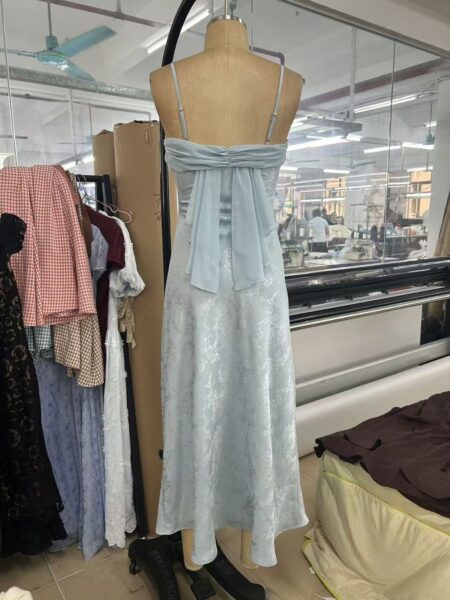
Why Zipper Quality Matters in Woven Dress Production
Woven dresses often rely on zippers because the fabric itself may provide limited stretch. The closure has to create enough opening for dressing while allowing the garment to return to the intended fitted shape. A poor zipper specification or unstable installation can cause rippling, seam distortion, catching, uneven waist seams or premature failure.
For buyers, zipper approval should therefore be part of product development rather than a last-minute trim purchase.
1. Select the Closure for the Dress Construction
The correct zipper depends on the garment design. Invisible zippers are common in fashion dresses because the teeth are largely concealed inside the seam. Other styles may use exposed metal or plastic zippers as a design feature, standard coil zippers, side-seam closures or back closures.
The choice should match the fabric weight, seam location, intended appearance and wearing stress. A very lightweight dress can react differently to a heavy zipper than a structured woven style.
2. Specify Zipper Length and Opening Clearly
A zipper that is too short may make the dress difficult to put on. A zipper that is too long can interfere with seam construction or create unnecessary bulk. The tech pack should identify the closure location, finished length and any relevant top or bottom stopping point.
Brands preparing production specifications can use the clothing tech pack guide to document construction and trim requirements before sampling.
3. Approve Color and Tape Against the Actual Fabric
For concealed zippers, the tape color should normally coordinate with the garment fabric closely enough that the closure does not become visually distracting. Digital color references alone may not show the difference accurately, especially on textured, washed or custom-dyed materials.
When the dress uses a strong contrast zipper intentionally, the approved sample should show the exact visual effect expected in bulk. The factory should not substitute a close color without buyer approval if the closure is visible.
4. Check How the Fabric Behaves Around the Zipper
Some woven fabrics are more sensitive to zipper installation than others. Lightweight viscose, satin-like fabrics, lace, loosely constructed materials and bias-cut panels can distort or ripple if the seam is stretched during sewing.
Stabilization, seam allowance, pressing method and operator handling may all influence the result. This is why the zipper should be evaluated in the intended fabric during sample development, not approved as an isolated trim.
5. Align Waist Seams, Panels and Design Lines
On dresses with waist seams, yokes, panels or print lines, the two sides should align when the zipper is closed. Even a functional zipper can look defective if a horizontal seam jumps up or down across the closure.
The production team should check alignment during sewing and again during finishing. For fitted garments, the closure area should also remain balanced rather than pulling to one side.
6. Test Slider Movement and End Stops
The slider should move smoothly through the full opening without catching fabric, lining or loose threads. Top and bottom stops should be secure, and the slider should not separate unexpectedly under normal use.
For lined dresses, the lining must be controlled so it does not enter the zipper path. Small construction details around the closure can have a large effect on the customer’s experience of the finished garment.
7. Check the Zipper Under Garment Tension
A zipper can operate correctly when the dress is lying flat but behave differently when the garment is worn. Fitted waist, bust or hip areas can place tension across the closure. During sample review, the buyer should check both function and appearance under realistic fit conditions.
This is also why measurement approval matters. If the garment is produced too small, the zipper may be blamed for a problem caused by incorrect fit or tolerance. Our women’s clothing measurement tolerance guide explains how bulk measurement control affects finished fit.
8. Inspect Bulk Installation Before Final Packing
In-line and final inspection should include more than opening and closing the zipper once. Inspectors should look for seam puckering, uneven insertion, exposed tape where it should be concealed, misaligned seam joins, broken stitching, trapped lining and slider problems.
Recurring zipper defects should be corrected while production is still running. Waiting until every dress is finished can turn one sewing-method issue into a large rework quantity. The garment quality control checklist provides a broader structure for in-line and pre-shipment inspection.
Woven Dress Zipper Checklist for Buyers
- Zipper type matches the design and fabric
- Length and opening are clearly specified
- Tape and slider color match the approved standard
- Installation lies smooth without distortion
- Waist seams and panel lines align when closed
- Slider runs smoothly without catching fabric or lining
- Stops and stitching are secure
- Closure functions correctly when the garment is worn
- Bulk inspection checks both function and appearance
Final Takeaway
Woven dress zipper quality is the result of component selection, garment engineering and sewing control working together. Buyers should approve the zipper in the actual dress sample, document the specification clearly and make closure inspection part of bulk quality control.
For fashion brands, wholesalers and retailers, this level of detail helps prevent a small trim from becoming a large production problem. The objective is not simply a zipper that opens and closes; it is a closure that supports the intended fit, appearance and durability of the finished dress.